Optometry Resources
Contact Lens & Vertex Distance Blog
Practical clinical guides on vertex distance conversion, contact lens fitting, myopia, hyperopia prescribing, toric lenses, and presbyopia, written by practising eye care professionals.
All Articles
10 articles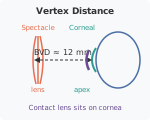
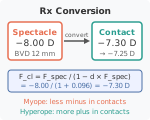
Spectacle to Contact Lens Conversion: A Step-by-Step Guide
Converting spectacle power to contact lens power isn't as simple as copying the Rx. Here's the step-by-step process with real examples.
Read article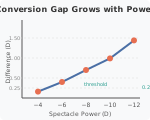
Vertex Distance and High Prescriptions: What Changes
For prescriptions above ±6.00 D, ignoring vertex distance can mean a half-dioptre error in your contact lens fitting. Here's what you need to know.
Read article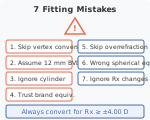
7 Contact Lens Fitting Mistakes to Avoid
From skipping vertex distance conversion to ignoring tear film quality, these are the most common contact lens fitting errors and how to avoid them.
Read article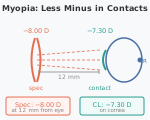
Contact Lens Power for Myopia: Why It's Weaker Than Your Glasses
Myopic contact lenses always carry less negative power than the spectacle prescription. Here's the optics behind it, with real numbers.
Read article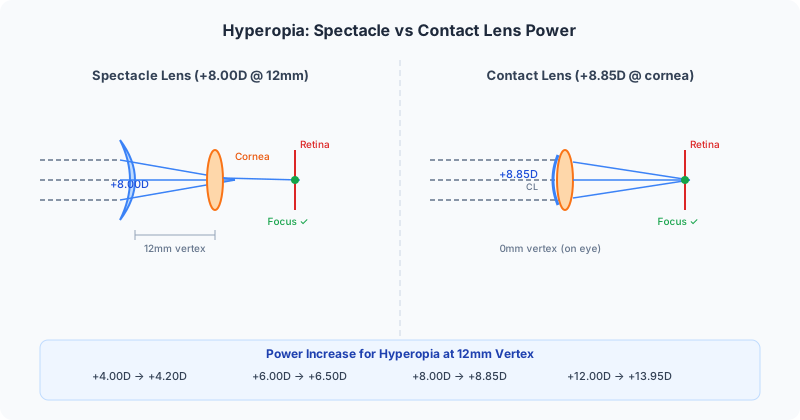
Hyperopia and Contact Lenses: Why the Power Goes Up
Hyperopic contact lenses need more positive power than the spectacle prescription, often by 0.50D or more. Here's the reason and the numbers.
Read article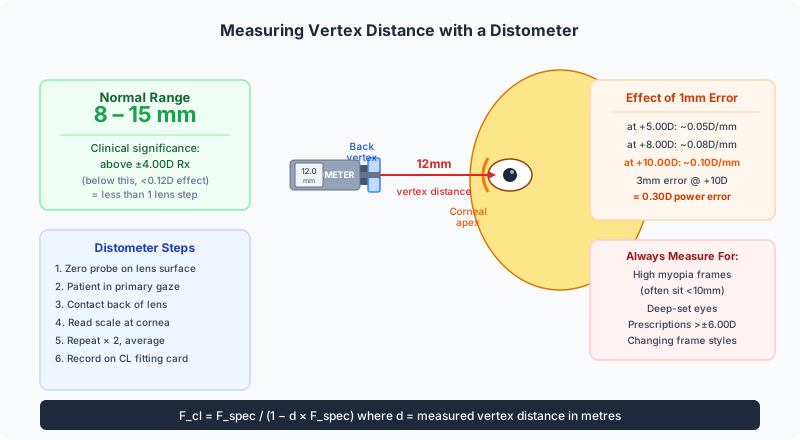
How to Measure Vertex Distance Accurately
Most practitioners default to 12mm, but measuring the actual vertex distance matters for high prescriptions. Here's how to do it right.
Read article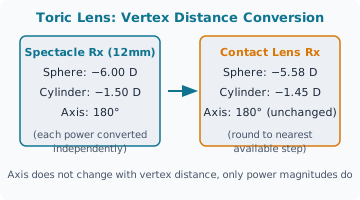
Fitting Toric Contact Lenses: Vertex Distance for Astigmatism
Astigmatic prescriptions need vertex distance conversion for both sphere and cylinder. Here's how to approach toric lens fitting with accurate converted powers.
Read article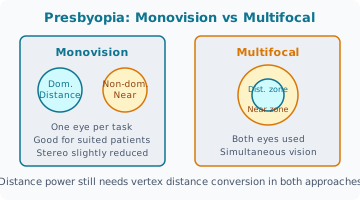
Presbyopia and Multifocal Contact Lenses: A Practical Guide
Presbyopic patients can wear contact lenses successfully, but multifocal fitting takes more than copying the near addition. Here's the clinical approach.
Read article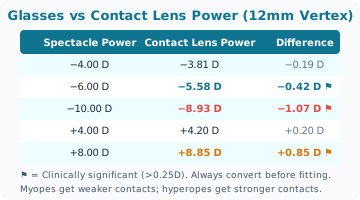
Contacts vs Glasses: Why the Prescription Numbers Differ
If your glasses say −7.00D but your contact lenses say −6.50D, that's not a mistake. Vertex distance explains the difference, and it's intentional.
Read article